Is “Chew Your Food Well” Just Discipline? What Recent Insights Teach Us About Chewing, the Autonomic Nervous System, and Gut Health
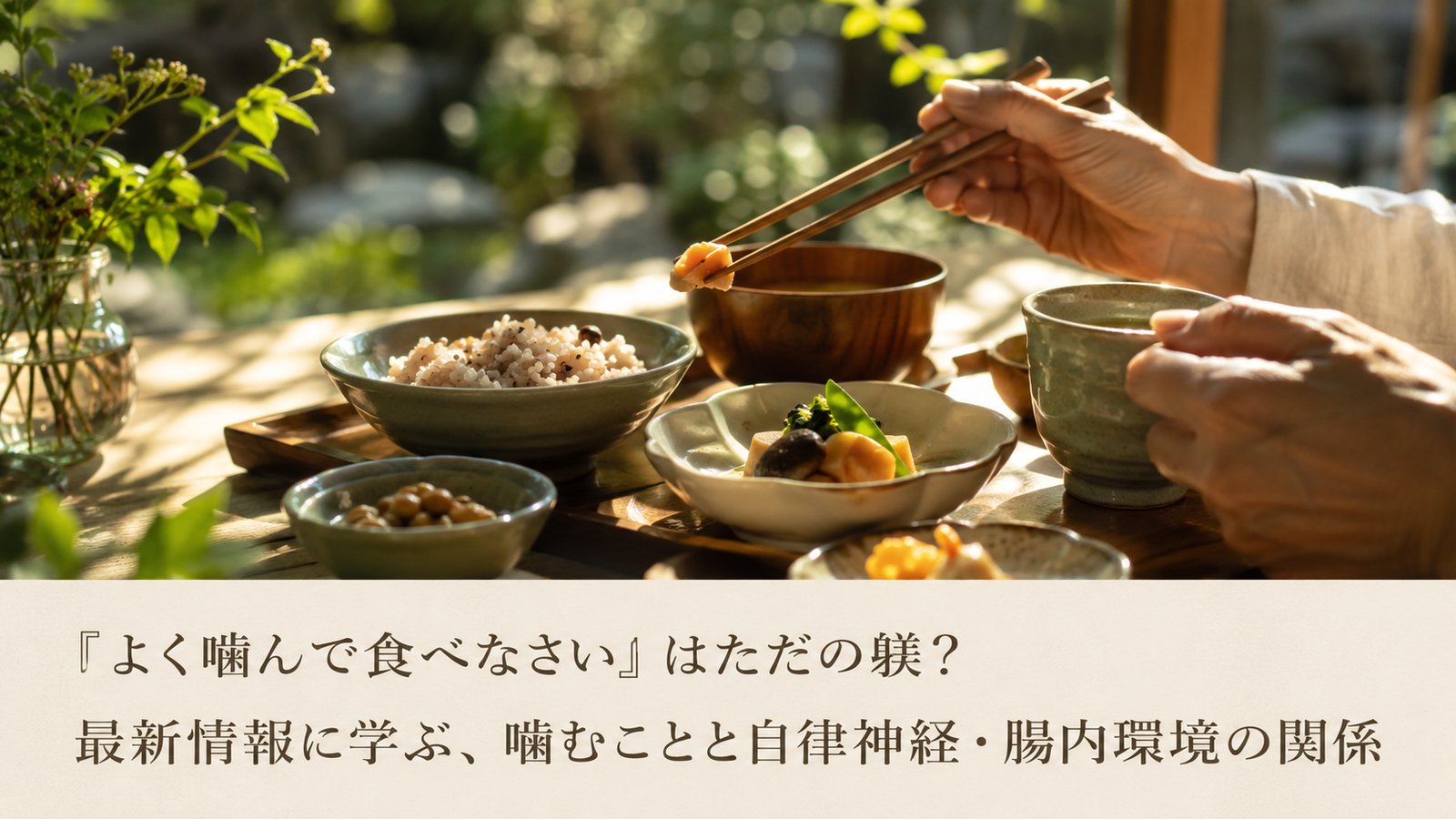
“Chew your food well” — many of us heard this as children. In the rush of daily life, it's easy to fall into eating quickly. In June 2026, an explainer from an internal medicine clinic drew attention by suggesting that this old-fashioned habit is more than simple discipline — it may be linked to the autonomic nervous system, gut health, and even mood stability. Here's an easy-to-follow summary for readers in midlife and beyond.
Three Points the Explainer Makes
- Chewing food well is said to ease the digestive burden on the stomach and improve nutrient absorption efficiency. Swallowing without chewing enough can place unnecessary strain on the stomach and intestines, the explainer notes.
- The act of moving the jaw itself stimulates the brain, and saliva released while chewing is expected to help balance the autonomic nervous system, the explainer points out. Moving the mouth is also explained as promoting the release of hormones involved in stomach function.
- There's a mechanism called the “gut–brain axis,” where the brain and gut closely influence each other via the autonomic nervous system and hormones, and many of the neurotransmitters involved in mood stability are produced in the gut, the explainer states. A disrupted gut environment is also introduced as something that can cause low mood for no apparent reason.
What We, in Midlife, Should Keep in Mind
This explainer conveys that the old-fashioned habit of “chewing well” may support not only digestion but also mental state, through the autonomic nervous system and gut health. Japanese people today are also said to often fall short on dietary fiber, and the following commonly recommended habits are said to help you become mindful of chewing and gut health.
- Deliberately take time to chew slowly — for example, put your chopsticks down between bites
- Actively include fiber-rich foods such as fermented foods, mushrooms, and seaweed
- If stomach discomfort or low mood persists, don't push through it — consult a medical institution
* The above are commonly recommended general health habits and do not guarantee improvement or treatment of any specific condition. If you have concerning symptoms, please consult a medical institution.
Source: Tanaka Naika Clinic blog (updated June 25, 2026, Japanese)
We offer DENBA Health, a spatial-potential care device that supports your everyday conditioning.
Learn more about DENBA HealthLast updated: July 3, 2026