Does “Strength Training Requires Special Equipment” Really Hold Up? What Recent Insights Teach Us About At-Home ‘Squat Habits’ and Leg and Hip Strength
“I'd like to do strength training, but going to a gym or buying equipment feels like a lot” — many people in midlife may feel this way. In June 2026, a sports and fitness media outlet drew attention by publishing a video series on “squats” that require no equipment and can be done at home. Here's an easy-to-follow summary for readers in midlife and beyond.
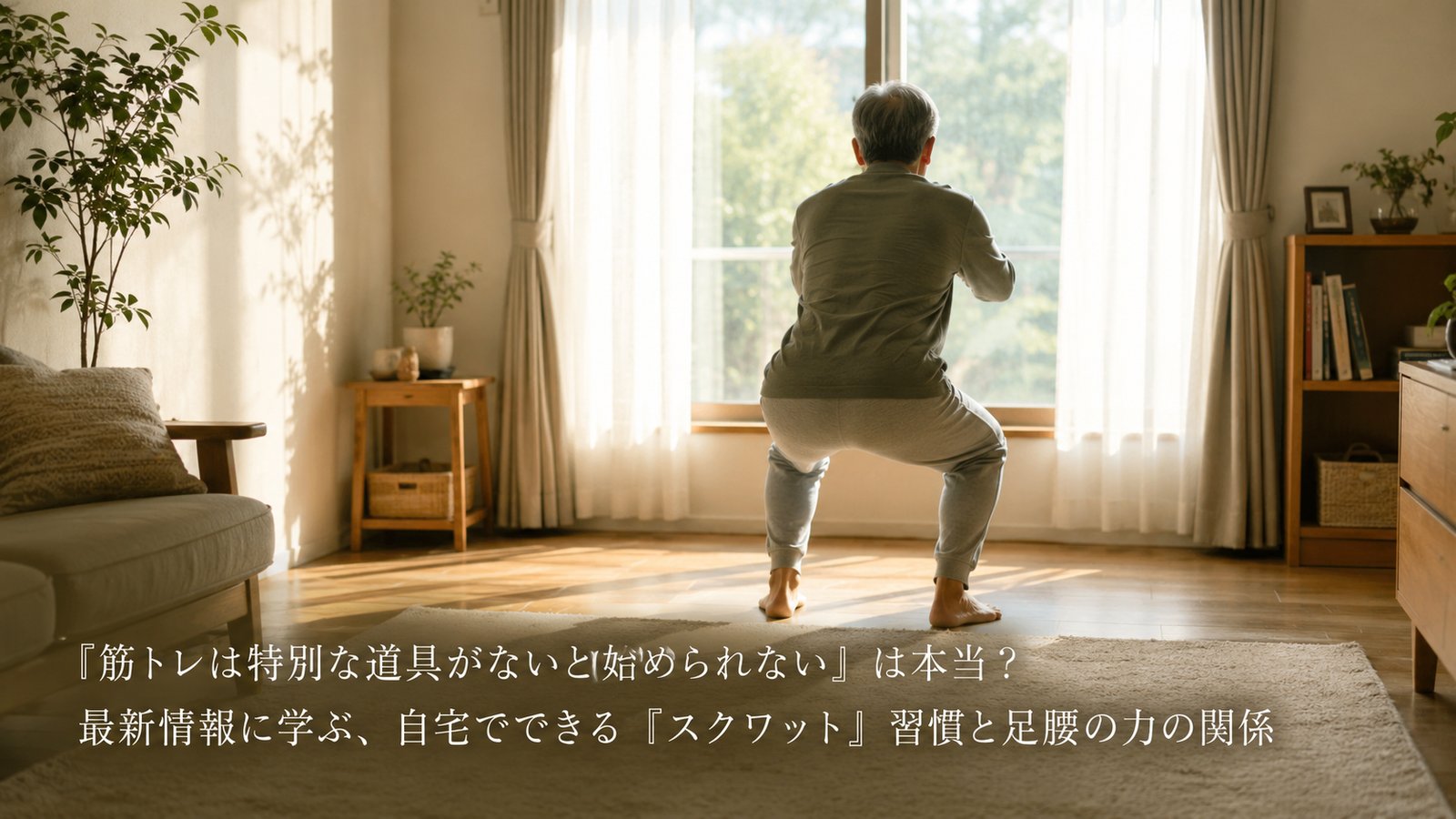
The Idea Behind ‘At-Home Squat Habits’
- Squats are described as a signature bodyweight exercise that mainly works the large muscles of the lower body — thighs and glutes. Since lower-body muscles form the foundation that supports walking and posture, and are prone to weakening with age, deliberately engaging them is said to be helpful.
- Not requiring special equipment or much space is cited as lowering the barrier to keeping up the habit. A follow-along video format is described as one way to address the challenge of “not being able to stick with it alone.”
- The content is designed to be useful for a wide range of people, regardless of exercise experience, from beginners to those who train regularly, the explainer notes. Starting small and building up gradually is described as a way to develop a lasting exercise habit.
What We, in Midlife, Should Keep in Mind
What this information conveys isn't that strength training requires a special place or equipment to get started — it's that knowing you can build it up gradually at home helps you stick with an exercise habit. Weaker lower-body strength is also said to affect walking ability and balance in midlife, and the following commonly recommended habits are said to help maintain leg and hip strength.
- If your knees feel strained, avoid squatting too deep, and use a chair back or similar support within a comfortable range
- Use video or audio guidance to build a habit of moving your body at a set time
- If you have knee or lower-back pain, don't increase the load on your own — consult a medical institution or specialist
* The above are commonly recommended general exercise habits and do not guarantee improvement or treatment of any specific condition. If you have an underlying condition or aren't feeling well, please consult a medical institution rather than pushing yourself.
Source: MELOS (APPY Co., Ltd.) press release (via @Press, June 25, 2026, Japanese)
We offer DENBA Health, a spatial-potential care device that supports your everyday conditioning.
Learn more about DENBA HealthLast updated: July 4, 2026